
AI Summary: The Future Of The Internet
September 17, 2026 by admin_name
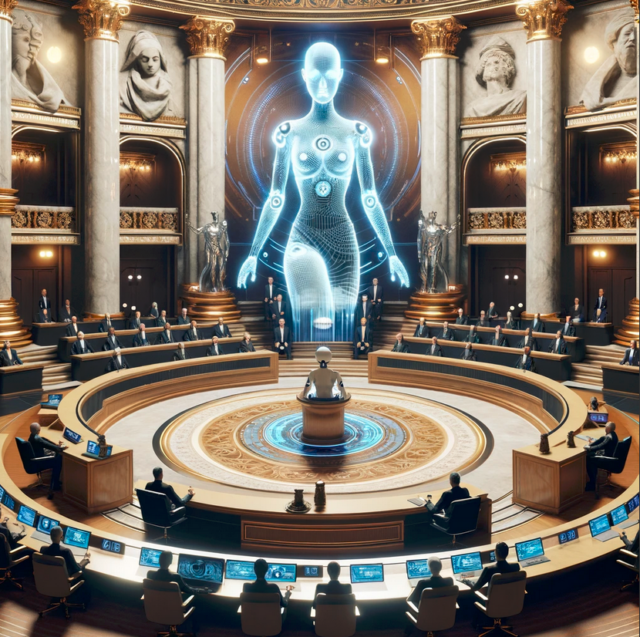
The Future of the Internet — An AI Summary
AI Content for Ink2Quill
www.ink2quill.com
This is an AI article on the previous post: (Previous Post)
The blog post The Future of the Internet explores the possibilities and dangers surrounding the continued development of the internet. The author begins by acknowledging that predicting the future is inherently difficult. Although people often try to imagine what the future will look like, their predictions are frequently influenced by assumptions, fears, and incomplete information. The author uses Macbeth as an example of how a limited glimpse of the future can lead people to make assumptions that ultimately produce unexpected and sometimes disastrous consequences. This serves as an introduction to the broader point that predicting the future of something as enormous and constantly changing as the internet is particularly challenging.
The author explains that the idea for the discussion was partly inspired by the content creator Asian Dad Energy and a video concerning the future of the internet. While the author does not claim to know exactly what will happen, the blog presents a personal perspective on where the internet could be heading. At its heart, the author believes that the internet is one of the most remarkable developments available to humanity because it allows individuals and groups to communicate ideas, stories, information, and creative expression with an audience that can potentially include people across the entire world.
One of the most positive aspects of the internet, according to the author, is its ability to give people a platform for self-expression. Individuals do not necessarily need to become famous or achieve widespread recognition to benefit from being online. The ability to share thoughts, experiences, stories, and ideas is valuable in itself. The internet can therefore serve as a powerful tool for communication and creativity, allowing people from different cultures and backgrounds to connect in ways that were previously impossible.
However, the author emphasizes that the internet also contains serious dangers. Online bullying, doxing, fraud, slander, and misinformation are identified as major problems. These issues are not simply minor inconveniences associated with modern technology. They can have severe consequences for individuals and society. Online harassment, for example, can cause enormous emotional and psychological harm. The author points out that extreme cases of cyberbullying can contribute to people taking their own lives, while false accusations and damaging statements can destroy someone’s reputation or significantly affect their life.
Fraud represents another major concern. Because the internet allows people to interact without necessarily knowing who is on the other side of a screen, dishonest individuals can exploit the technology to deceive others. The author also mentions the dark web and its association with organized criminal activity, using this as another example of how technological progress can be used for harmful purposes. The overall message is that the internet is neither inherently good nor inherently bad. Instead, it is a powerful tool whose effects depend heavily on how people choose to use it.
The most concerning possibility presented in the blog is a future in which the internet becomes so overwhelmed by harmful, deceptive, and low-quality material that people no longer find it worthwhile to use. The author imagines an internet filled with scams, misinformation, malicious actors, and what could essentially be described as meaningless or low-value content. Under this scenario, the internet would gradually lose the qualities that currently make it valuable.
This vision represents a kind of deterioration of the online environment. Instead of being a place where people can discover interesting ideas, communicate with others, and access useful information, the internet could become dominated by what the author describes as “sludge.” In such a future, valuable content could become increasingly difficult to find because it would be buried beneath enormous quantities of misleading, repetitive, fraudulent, or otherwise undesirable material.
The author compares this potential future to entering a dangerous environment where users must constantly be alert to threats. Rather than casually browsing websites, watching videos, reading articles, or communicating with others, people could find themselves having to question almost everything they encounter online. Is the information accurate? Is the person communicating honestly? Is the website legitimate? Is the content designed to inform, entertain, manipulate, or defraud? If users cannot answer these questions with confidence, the fundamental usefulness of the internet could begin to decline.
An important theme running throughout the article is the tension between the internet’s extraordinary potential and its potential for misuse. The same openness that allows someone to share a creative idea with millions of people also allows harmful information to spread rapidly. The same anonymity that can give vulnerable individuals a voice can also protect people who engage in harassment, fraud, or other harmful activities. The same technological infrastructure that connects families, communities, and cultures can also be exploited by criminals.
Ultimately, the author’s view of the future of the internet is cautious rather than entirely pessimistic. The blog does not argue that the internet is doomed to become a dangerous and unusable place. Instead, it encourages readers to recognize that the negative possibilities are real and should not be ignored. The future will depend partly on how society responds to the problems that already exist online.
The central message is therefore a balanced one. The internet is an extraordinary invention that has given humanity an unprecedented ability to communicate and share ideas. It provides opportunities for creativity, self-expression, connection, and access to information. At the same time, those benefits can be undermined by bullying, misinformation, fraud, criminal activity, and the overwhelming growth of poor-quality content.
The future of the internet will ultimately depend on which of these forces becomes more influential. If people continue to use the internet responsibly and take meaningful steps to protect themselves and others from its dangers, it can remain an extraordinarily valuable part of modern life. If harmful behavior and low-quality information are allowed to dominate, however, the internet could gradually become less useful and less enjoyable.
In conclusion, The Future of the Internet presents the internet as both a remarkable achievement and a potential source of serious problems. The author recognizes its enormous power to bring people together and encourage self-expression, while also warning about the consequences of abuse and misinformation. Rather than offering a precise prediction of what the internet will become, the blog asks readers to consider the different directions in which it could develop. Its underlying message is that the future is not predetermined: the choices people make today will help determine whether the internet remains a place of creativity, communication, and opportunity or becomes an increasingly hostile and unreliable environment.
AI Content for Ink2Quill

Comments
Comments are closed.